The City of LaFayette developed a Safety Action Plan as a part of the USDOT Safe Streets and Roads for All Program (SS4A). The goal of the plan is to eliminate fatal and serious injury crashes on LaFayette's roads. The recommendations from the plan will allow the City to pursue SS4A implementation funds and other applicable funding sources to implement roadway safety projects and programs.
The Safety Action Plan is complete!

Learn more about the Safety Action Plan by scrolling through this Story Map
About the SS4A Action Plan
Vision Zero is a strategy aimed at eliminating all traffic fatalities and severe injuries, while promoting safe and healthy mobility for all.
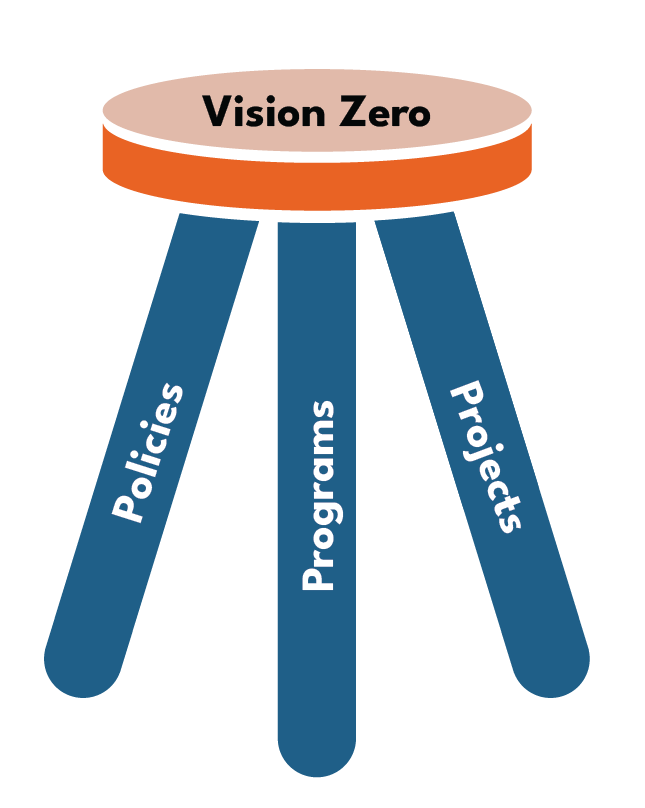
The 3-Legged Stool Approach highlights the interdisciplinary approach to achieve Vision Zero. It also breaks down the solutions into policies, programs, and projects.
Stakeholder engagement and collaboration are crucial to our planning process. We will conduct engagement activities early and at key junctures throughout the project to:
- Include diverse perspectives and insights
- Identify risks not apparent in the data
Our engagement process will involve stakeholders and the public in decision-making through various methods, including surveys and open houses.
Our safety analysis will utilize five years of crash data (2020-2024) from the Georgia Department of Transportation (GDOT), along with roadway and land use data. This comprehensive analysis will:
- Identify key crash patterns, trends, and contributing factors leading to fatal and serious injury crashes
- Determine the types of infrastructure, behaviors, and contexts with the greatest impact on safety performance
- Inform policy, infrastructure, and programming improvements for all modes of travel
The action plan will outline specific strategies to address safety challenges and goals in the City of LaFayette. It will include:
- Recommended activities such as engineering standards, new infrastructure, or policy changes
- Identification of responsible agencies or individuals for each activity
- Benchmarks and metrics to target projects, measure progress, and maintain transparency in implementation efforts
Document Library
-
Public Meeting #1 BoardsPDF (3.02 MB)
-
Public Meeting #2 BoardsPDF (4.52 MB)
-
Stakeholder Meeting #4 Slides - Countermeasures & MetricsPDF (5.84 MB)
-
Stakeholder Meeting #3 Slides - PolicyPDF (3.25 MB)
-
Stakeholder Meeting #2 Slides - Data AnalysisPDF (3.20 MB)
-
Stakeholder Meeting #1 Slides - IntroductionPDF (2.57 MB)
Project Timeline
-
Timeline item 1 - complete
Project Kickoff
January 2026
Meet with the Project Team to discuss scope, deliverables, and timeline. Establish the Stakeholder Committee.
-
Timeline item 2 - complete
Data Analysis
February 2026
Review crash data, crash severity, and crashes involving vulnerable users. Develop the candidate High Injury Network.
-
Timeline item 3 - complete
Policy and Program Analysis
March 2026
Review adopted policies and programs. Develop initial recommendations for policy revisions and adoptions, as well as education and enforcement programs.
-
Timeline item 4 - complete
Countermeasures and Metrics
April 2026
Review recommended countermeasures for roadway improvements and discuss ongoing tracking of community progress after adoption of the safety plan.
-
Timeline item 5 - complete
Final Recommendations and Plan Adoption
May 2026
Present the final plan and begin implementation.